- NEWS
-
-
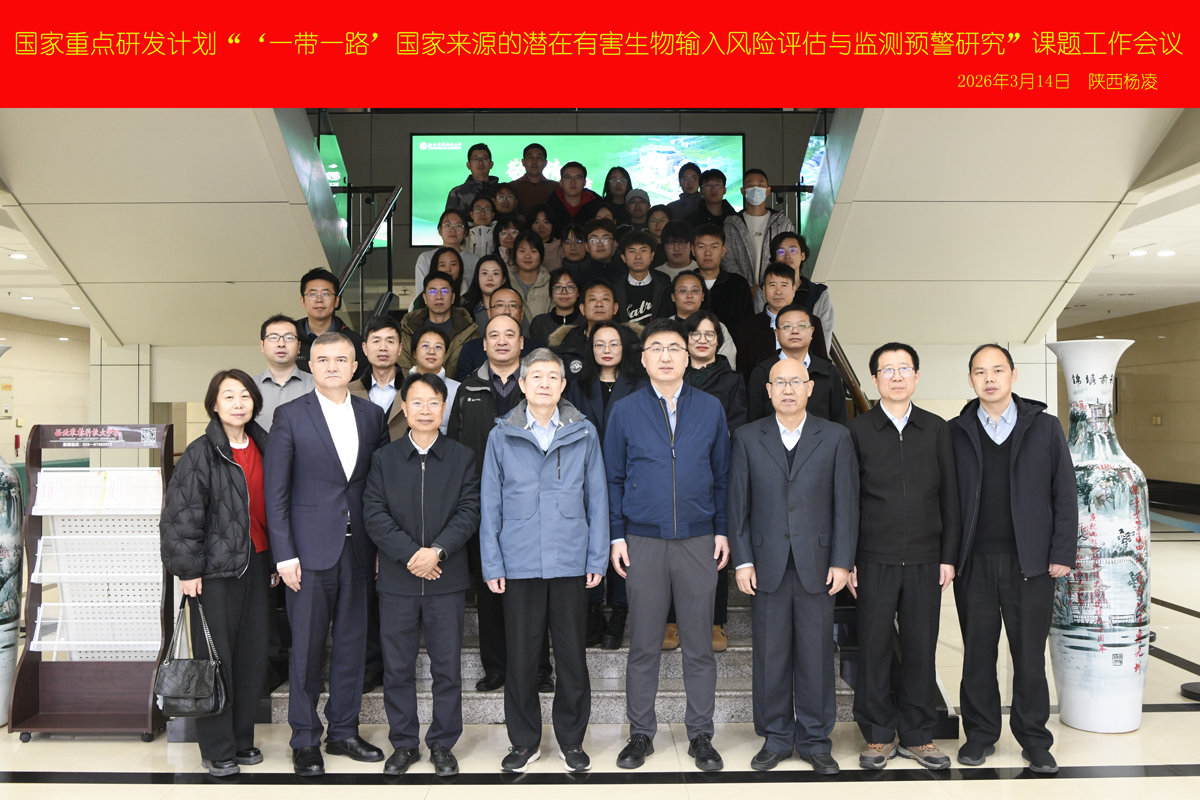
On March 14, a progress review meeting for Task 4 of the National Key R&D Program, titled “Risk Assessment and Monitoring and Early Warning of Harmful Organisms Originating from Belt and Road Countries,” was held in Yangling. The meeting focused on Task 4, “Risk Assessment and Monitoring and Early Warning of Potential Invasive Alien Species.” Organized by the project team, the meeting aimed to present interim research progress and outline priorities for the next phase. The meeting was attended by Project Leader Professor Xiaoping Hu, researchers engaged in invasive species prevention and control across China, as well as the leaders and core members of Task 4 subprojects.
Distinguished participants included Huang Yajun, Second-Level Inspector of the Department of Animal and Plant Quarantine of the General Administration of Customs; Liu Miao, Director of the Division of Major Projects at Northwest A&F University; Liu Zhanyuan, Director of the Animal and Plant Quarantine Division of Xi’an Customs; Zhang Xianglin, Director of the Urumqi Customs Technical Center; Bilalidin, Second-Level Researcher of the Animal and Plant Quarantine Division of Urumqi Customs; and Li Yongcheng, President of the Honghe Prefecture Academy of Agricultural Sciences, Yunnan Province. Members of the research team—including Researcher Xubin Pan from the China Academy of Inspection and Quarantine, Associate Professor Hao Zhang and Associate Professor Qiang Wang from Northwest A&F University, as well as doctoral and master’s students—also presented their research progress.
During the meeting, Northwest A&F University and Xi’an Huangshi Bioengineering Co., Ltd. jointly donated four sets of rapid detection kits for (potential) invasive alien species to Xi’an Customs.
In the thematic discussion session, participants addressed key challenges faced by frontline customs operations, particularly the mismatch between hardware equipment and intelligent software systems in pest monitoring. The meeting identified several priorities for the next stage of research and development: (1) improving image acquisition quality to ensure better integration between software and high-performance hardware; and (2) developing portable, user-friendly, and rapid intelligent detection systems to cope with increasing pressure from the surge in agricultural product imports. The meeting also proposed a forward-looking vision to collaborate with Belt and Road countries to promote the internationalization of China’s technical standards, enabling mutual governmental recognition and enhancing global influence.
Furthermore, the project established clear milestones, aiming to achieve seven landmark outcomes by 2026: breakthroughs in weed image recognition technology; publication of a series of high-quality academic papers; establishment of a comprehensive pest database for Belt and Road countries; development of a mature and deployable intelligent identification software system; field application of rapid detection kits for invasive species; formulation and release of relevant technical standards; and practical implementation of intelligent monitoring and early warning systems based on DeepSeek models, along with autonomous sampling robotic dogs.
This progress meeting systematically reviewed the current technological bottlenecks in intelligent monitoring and clarified the research roadmap for the next three years. Taking this meeting as a new starting point, the project will further strengthen collaboration among academia, industry, and research institutions, accelerate the transformation of scientific achievements into practical applications, and strive to achieve dual breakthroughs in scientific innovation and societal service—thereby providing strong technological support for safeguarding national biosecurity.
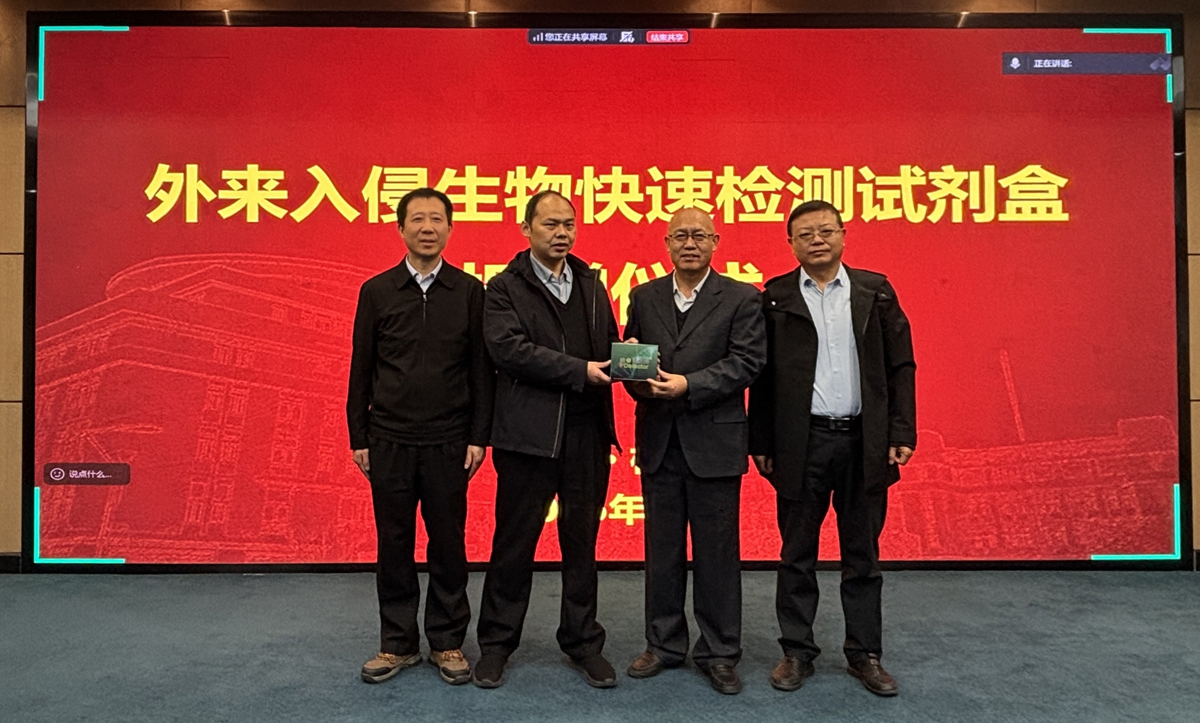
Professor Xiaoping Hu of Northwest A&F University (second from right) and Qin Zhibo, Chairman of Xi'an Huangshi Bioengineering Co., Ltd. (first from right), donated rapid detection kits to the Xi'an Customs Technical Center. Liu Zhanyuan (first from left), Director of the Animal and Plant Quarantine Division of Xi’an Customs, and He Qiang (second from left), Deputy Director of the Xi'an Customs Technical Center, attended the ceremony and accepted the donation.