- NEWS
-
-
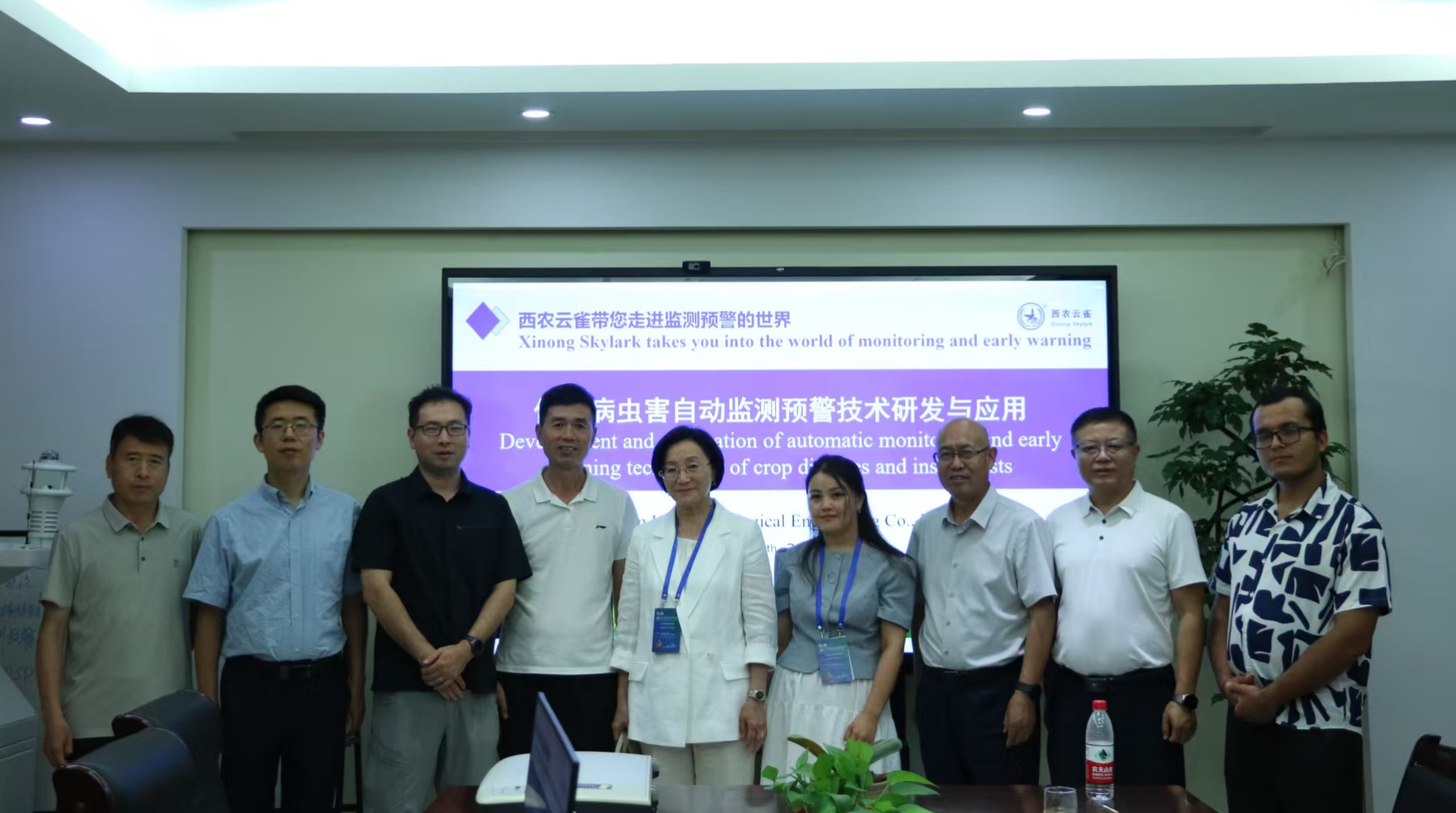
In July 2026, a delegation from Kazakh National Agrarian University (KNAU), led by Professor Kairova Gulshariya, head of the university's disciplinary program, visited Northwest A&F University (NWAFU) to promote academic exchange and explore collaborative opportunities in crop disease and pest monitoring and early warning technologies. During the visit, the delegation toured an industry partner, field monitoring stations, and research laboratories, reaching broad consensus on future collaboration, including joint applications for international research projects and cooperative scientific research.
The delegation first visited Huangshi Bioengineering Co., Ltd., where they learned about the university–industry collaborative innovation model. Company representatives introduced the latest advances in the research and application of an automated crop disease and pest monitoring and early warning system. Integrating Internet of Things (IoT) sensing technologies, big data analytics, and artificial intelligence algorithms, the system enables early detection and precise management of multiple crop diseases. Professor Kairova expressed particular interest in the system's demonstrated effectiveness in reducing pesticide use while improving disease management efficiency.
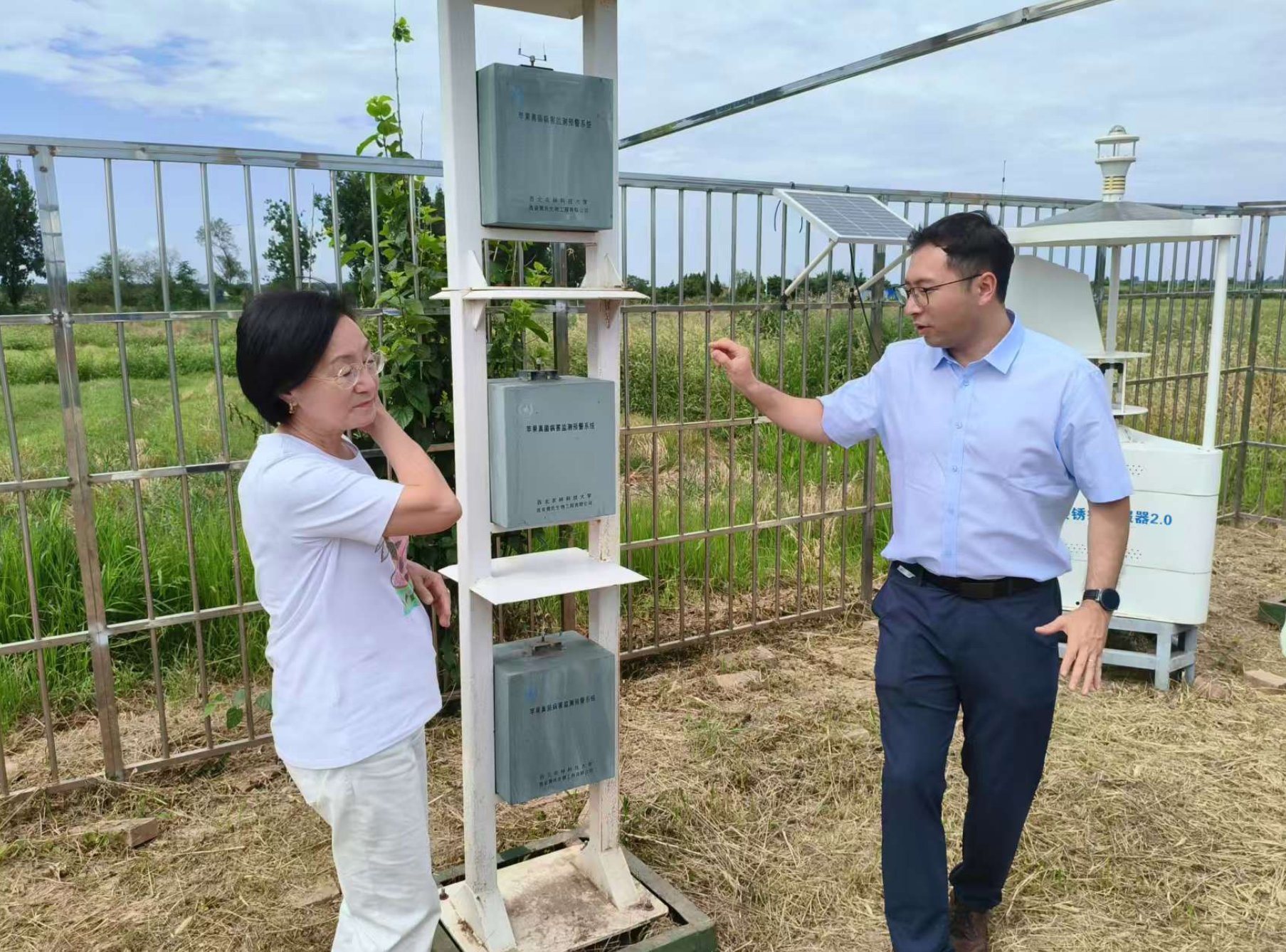
The delegation then visited the Caoxinzhuang experimental farm to inspect field-based disease monitoring facilities. A series of automated disease forecasting devices and supporting monitoring equipment for major food crops were demonstrated, including forecasting systems for apple diseases, Fusarium head blight of wheat, wheat stripe rust, northern corn leaf blight, and rice blast, as well as airborne spore trapping instruments for pathogen detection and analysis. During the visit, the research team introduced the nationwide deployment and practical application of the automated wheat Fusarium head blight forecasting system, with more than 500 units installed across China's major grain-producing regions and several Belt and Road partner countries. The system has achieved a forecasting accuracy of over 80% under field conditions. The delegation closely observed the operation of the equipment and engaged in in-depth discussions with researchers on field deployment, sensor operation, and data transmission technologies.
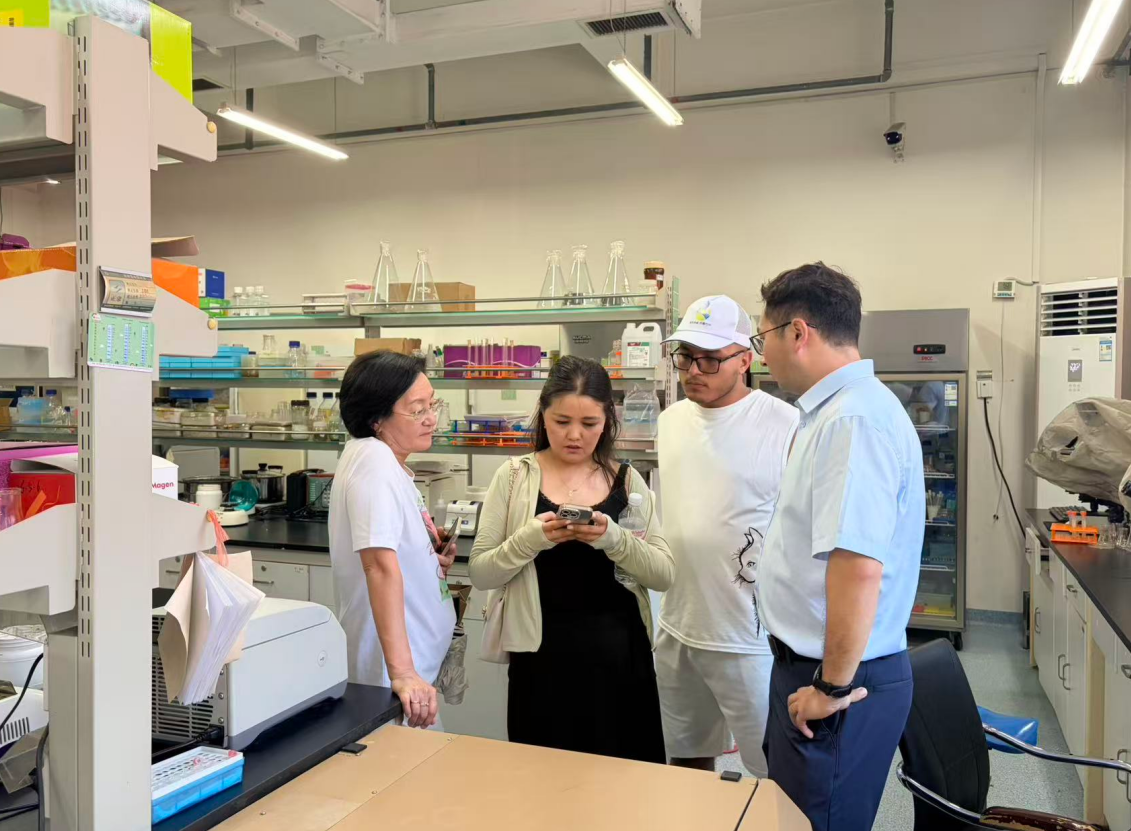
The delegation also toured the research laboratories, where they learned about the development of the research team and its major scientific achievements. During the subsequent meeting, both sides exchanged views on future cooperation in crop disease and pest management between China and Kazakhstan. Professor Kairova introduced Kazakhstan's research priorities and practical challenges in plant protection, while the NWAFU team shared its recent progress in developing intelligent monitoring and early warning technologies and its experience in international scientific collaboration.
Both sides agreed that, in the face of increasing challenges posed by climate change and the growing threat of transboundary crop diseases and pests, strengthening international scientific cooperation is of strategic importance. Looking ahead, the two institutions will actively promote joint applications for international collaborative research projects and establish long-term research partnerships to advance innovative technologies for crop protection and contribute to regional and global food security.